loading net worth // from filings
charlie scharf net worth // filing-anchored

Charlie Scharf Net Worth (2026)
Charlie Scharf is CEO of Wells Fargo (WFC). Most of a public-company CEO’s on-paper wealth is their stake in that company — anchored here on the number you can verify.
ANCHORING FROM FILINGS
We’re matching Charlie Scharf’s latest SEC beneficial-ownership filing to compute the verified stake value. In the meantime, the full pay breakdown and the WFC workspace are live. We only publish the stake once it traces to a specific filing — no guesses.
At a glance
| Company | Wells Fargo (WFC) |
| Title | CEO |
| Verified stake | — |
| Shares owned | — |
| Latest total pay | $95M breakdown → |
| Age | ~61 |
HOW THIS IS CALCULATED
We take the shares Charlie Scharf reports owning in their most recent SEC Form 4 and multiply by the latest share price. That gives a stake value you can check against the filing itself. Everything beyond that stake — real estate, private holdings, cash, past compensation — is estimated or simply not public, and we say so rather than roll it into one number.
BIOGRAPHY
Charlie Scharf was born in 1965 and grew up in Westfield, New Jersey, the son of a stockbroker, working back-office brokerage jobs as a teenager. He studied at Johns Hopkins and earned an MBA from NYU, then got his start in 1987 working for Jamie Dimon, becoming a long-running protege who followed him across firms.
He went on to run companies himself, serving as chief executive of Visa and then BNY Mellon, before taking over Wells Fargo in October 2019. His job there has been to clean up after the bank’s fake-accounts scandal, and regulators lifted its punitive asset cap under his watch.
Scharf is a career professional manager. His Wells Fargo stake came from executive compensation, which is what this page measures.
Born 1965 · Johns Hopkins University (BA); NYU Stern (MBA)
CAREER
NOTABLE
- Has led three major companies as chief executive: Visa, BNY Mellon, and Wells Fargo.
- Was brought in from outside to clean up after Wells Fargo accounts scandal and sits on the board of Microsoft.
COMPENSATION HISTORY · from SEC proxy statements
| Fiscal year | Total pay |
|---|---|
| 2025 | $95M |
The richest CEOs
Ranked by filing-verified stake






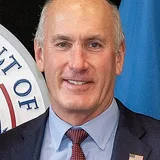
The stake value is filing-derived and verifiable; any broader “net worth” is an estimate. Photo: C-SPAN, CC0 (Wikimedia Commons). Share counts are the latest reported on SEC filings and change as the executive trades; the price is the last close, so the stake value moves with the market. This is not an official or complete accounting of anyone’s wealth. Educational only — not investment advice.