loading net worth // from filings
michael miebach net worth // filing-anchoredas of 2026-03-01 · Form 4
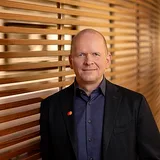
Michael Miebach Net Worth (2026)
Michael Miebach is President & CEO of Mastercard (MA). Most of a public-company CEO’s on-paper wealth is their stake in that company — anchored here on the number you can verify.
WHAT WE ESTIMATE
varies
Past cash compensation, sold shares, real estate, and other public holdings — estimable from records, but not exact.
WHAT CAN’T BE KNOWN
private
Private company stakes, trusts, cash, debts, and undisclosed assets. Anyone publishing these as a single number is guessing.
At a glance
| Company | Mastercard (MA) |
| Title | President & CEO |
| Verified stake | $64M |
| Shares owned | 115,921 |
| Latest total pay | $35M breakdown → |
| Age | ~58 |
HOW THIS IS CALCULATED
We take the shares Michael Miebach reports owning in their most recent SEC Form 4 and multiply by the latest share price. That gives a stake value you can check against the filing itself. Everything beyond that stake — real estate, private holdings, cash, past compensation — is estimated or simply not public, and we say so rather than roll it into one number.
BIOGRAPHY
Michael Miebach was born in Bavaria, Germany, in 1968, and built an international banking career before payments. He studied business at the University of Passau, then worked at Citibank in Frankfurt and later ran the Middle East and North Africa region for Barclays.
He joined Mastercard in 2010 to lead its business across the Middle East and Africa from Dubai, rose to chief product officer and then president, and became chief executive at the start of 2021, succeeding Ajay Banga. He pushed the company into real-time payments, open banking, and digital identity.
Miebach is a hired executive. His stake in Mastercard came from a decade of compensation, the anchor of the figure here.
Born 1968 · University of Passau (MBA); Harvard Business School (AMP)
CAREER
2021-presentPresident & CEO, Mastercard
2016-2020Chief Product Officer, Mastercard
2007-2010Managing Director, Barclays
NOTABLE
- Rose through Mastercard Middle East and Africa business, focused on financial inclusion, before becoming chief executive.
- Sits on the board of IBM and of the Metropolitan Opera.
COMPENSATION HISTORY · from SEC proxy statements
| Fiscal year | Total pay |
|---|---|
| 2025 | $35M |
The richest CEOs
Ranked by filing-verified stake




The stake value is filing-derived and verifiable; any broader “net worth” is an estimate. Photo: Drew Gurian, CC BY-SA 4.0 (Wikimedia Commons). Share counts are the latest reported on SEC filings and change as the executive trades; the price is the last close, so the stake value moves with the market. This is not an official or complete accounting of anyone’s wealth. Educational only — not investment advice.